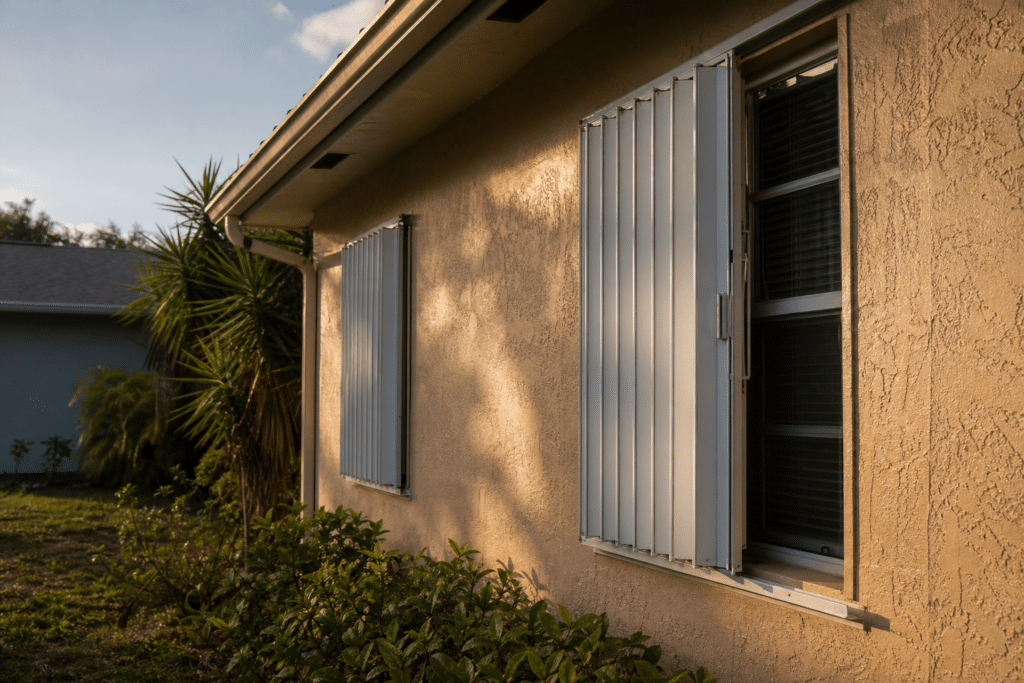
You have picked out the shutters, you have a quote in hand, and then someone asks the question that stalls half the shutter projects in Southwest Florida: “Do we need a permit for this?” It is a fair question, and the honest answer for most homeowners in Lee County is yes. The good news is that a permit is nothing to dread. When it is handled properly, it is one of the best consumer protections you have, and when you work with an established installer it should not cost you any extra legwork at all.
Here is what the permit requirement actually means, which projects it applies to, and how the process works when you let a licensed shutter company manage it for you.
Why Lee County Requires Permits for Shutter Installation
Lee County sits squarely inside Florida’s wind-borne debris region, which means the Florida Building Code holds opening protection here to a higher standard than in most of the country. Hurricane shutters are not decoration. They are structural protection that has to stay attached to your home while debris is flying at highway speeds, and the anchors holding them in place matter just as much as the shutter itself.
A permit is how the county verifies two things: that the product being installed has been tested and approved for high-velocity wind zones, and that it is being fastened to your home the way the engineering documents say it must be. Without that check, a shutter can look perfectly sturdy on a calm day and still fail in the first hour of a storm because it was anchored into soft material or spaced incorrectly.
Which Shutter Projects Need a Permit
As a general rule in Lee County, permanently attached opening protection requires a permit. That includes the systems we install most often:
- Accordion shutters, which are bolted to the wall on tracks beside each opening
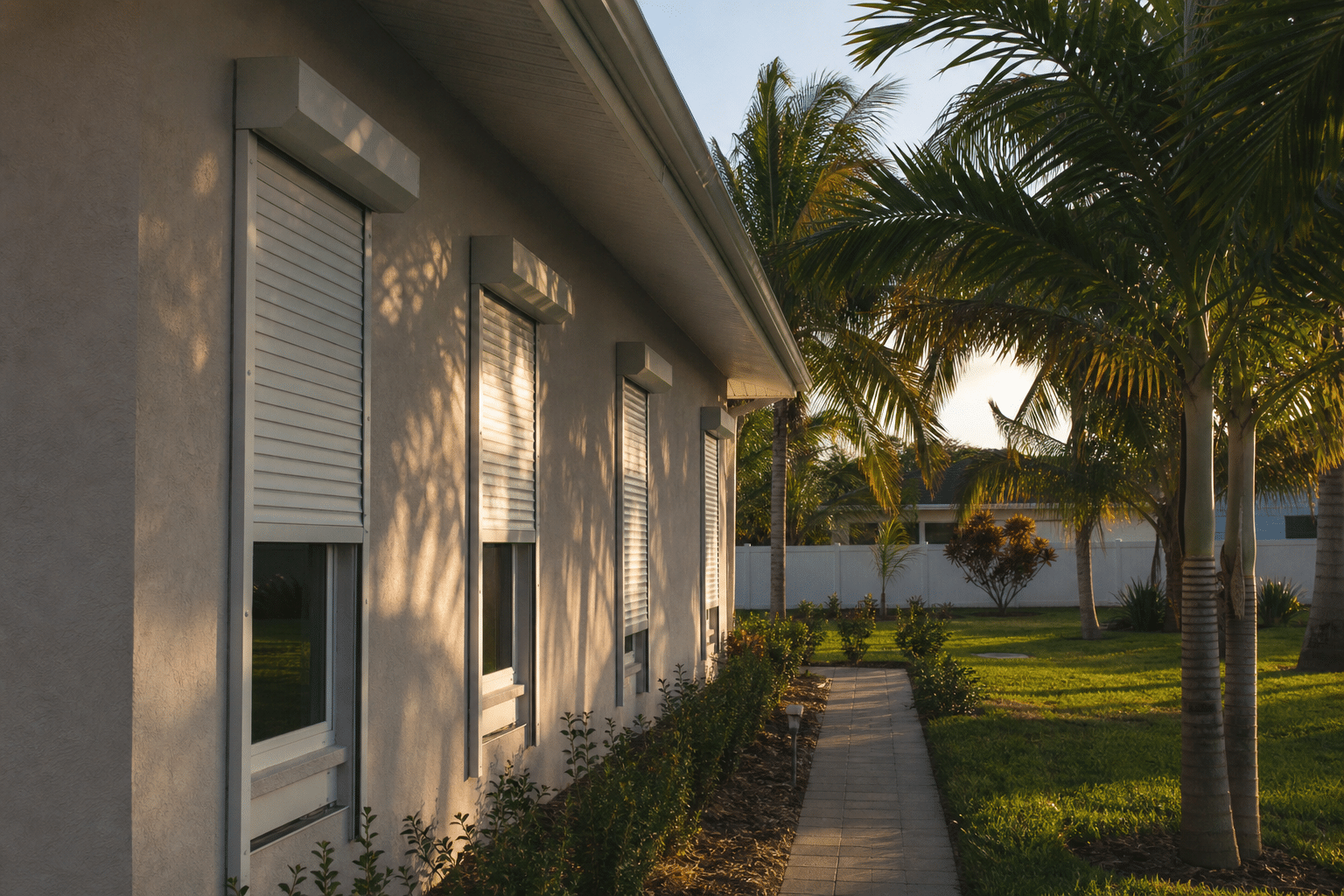
- Roll-down shutters, whether manual or motorized, along with roll-down screens
- Bahama shutters, which mount above the window on permanent hinges
- Storm panel systems, because the tracks and anchoring hardware are permanently fastened to the structure even though the panels themselves go up and down each season
Straight repairs are treated differently. Replacing a worn crank on an existing shutter or swapping a damaged slat generally does not require a new permit, since the anchoring and the approved product are unchanged. If a repair grows into replacing the whole unit or relocating it, it becomes an installation again, and the permit requirement comes back with it.
If you are not sure which side of that line your project falls on, ask before work begins. It is a two-minute conversation that can save you a real headache at resale time.
How Product Approval Fits In
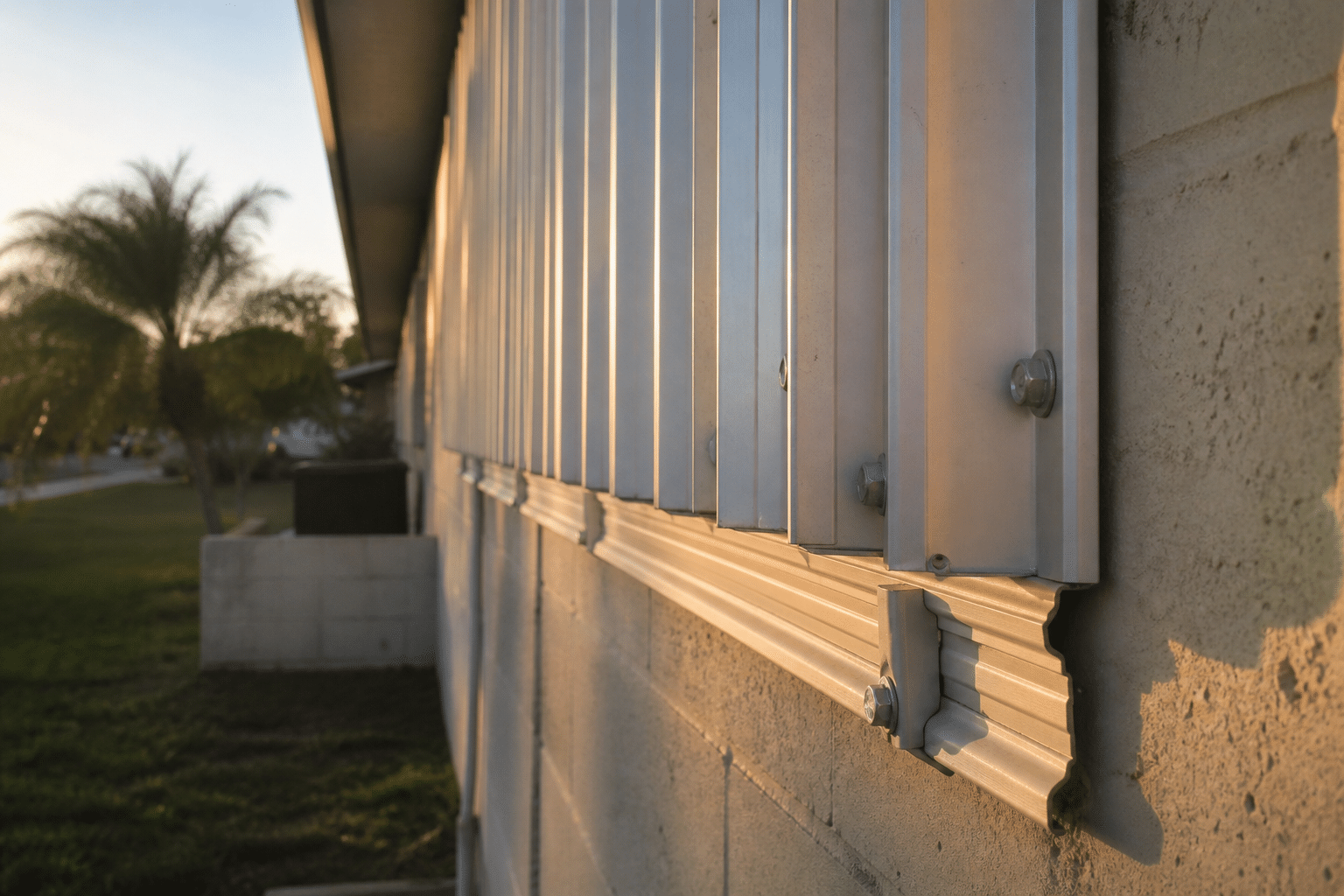
Every shutter we install carries a Florida Product Approval or Miami-Dade Notice of Acceptance, which documents that the product passed impact and pressure testing. The permit application is where those documents actually get used. The county reviews the approval paperwork against your specific openings, and the inspector later confirms the installation matches what was approved. The approval says the product can perform; the permit and inspection confirm that it will perform on your house.
What the Permit Process Looks Like
When you hire us, the process runs like this:
- We prepare and file the application. That includes the product approval numbers, engineering details, and the specifics of your openings. You do not have to stand in line at a county office.
- The county reviews and issues the permit. Simple residential shutter permits usually move quickly, and we time the installation around it.
- We install to the engineering specs. Anchor type, fastener spacing, and embedment depth all follow the approved documents, not guesswork.
- An inspector signs off. The final inspection closes the permit and creates a public record that your opening protection was installed correctly.
From your side, the whole thing should feel invisible. The only part you will notice is the inspection visit, and we coordinate that too.
What Happens If You Skip the Permit
Unpermitted shutter work has a way of surfacing at the worst possible moments. Here is where it tends to bite:
- Insurance discounts. Opening protection can earn a meaningful credit on your windstorm premium, but the wind mitigation inspection that unlocks it looks for properly documented, code-compliant protection. Unpermitted work can cost you savings year after year.
- Claims. After a storm, an adjuster reviewing damage may ask when and how the shutters were installed. A closed permit answers that question cleanly.
- Selling your home. Buyers’ title and inspection processes increasingly flag unpermitted improvements. Resolving an old unpermitted installation after the fact costs more than permitting it correctly the first time.
- Doing it twice. If unpermitted work is discovered, the county can require it to be opened up, corrected, and inspected, which sometimes means redoing an installation that looked finished.
A contractor who offers to “save you the permit fee” is not saving you anything. They are transferring the risk to you.
What It Costs and Who Handles It
Permit fees for residential shutter projects are modest compared to the cost of the shutters themselves, and we build them into your quote so there are no surprises. When you compare estimates from different companies, it is worth asking each one directly: is the permit included, and who pulls it? A licensed contractor pulling the permit under their own license is the arrangement that protects you. Be cautious of any proposal that asks you to pull an owner-builder permit for work the company is performing.
Frequently Asked Questions
Do I need a permit to put up and take down my storm panels each season?
No. The permit covers the original installation of the track and anchoring system. Mounting and removing your panels each storm season is normal use, not new work.
How long does a shutter permit take in Lee County?
Most residential shutter permits are reviewed and issued quickly, often within days. We file early in your project timeline so the paperwork is never the thing holding up your installation.
Do I need a permit for shutters on a lanai or pool cage opening?
Permanently mounted protection over lanai and patio openings generally follows the same rules as window protection. Because these openings are often oversized, the engineering review matters even more, so this is a project where a permit works strongly in your favor.
My shutters were installed years ago and I cannot find a permit. What should I do?
Start with a records search through the county’s online permitting portal. If nothing turns up, talk to us. Depending on the product and condition, options range from documenting the existing system to replacing it with a current, permitted installation.
Get It Done Right the First Time
Permits are one of those details that separate a shutter installation you can trust from one you have to wonder about. We handle the paperwork, the engineering documents, and the inspection on every hurricane shutter installation we perform, whether it is a full home of accordion shutters or a single roll-down shutter over a problem opening. If you are budgeting a project, our cost guide is a good place to start, and when you are ready for a quote that includes permitting from day one, contact us for a free estimate.
Related Hurricane Protection Services
Explore the service pages and buying resources most closely tied to this topic.