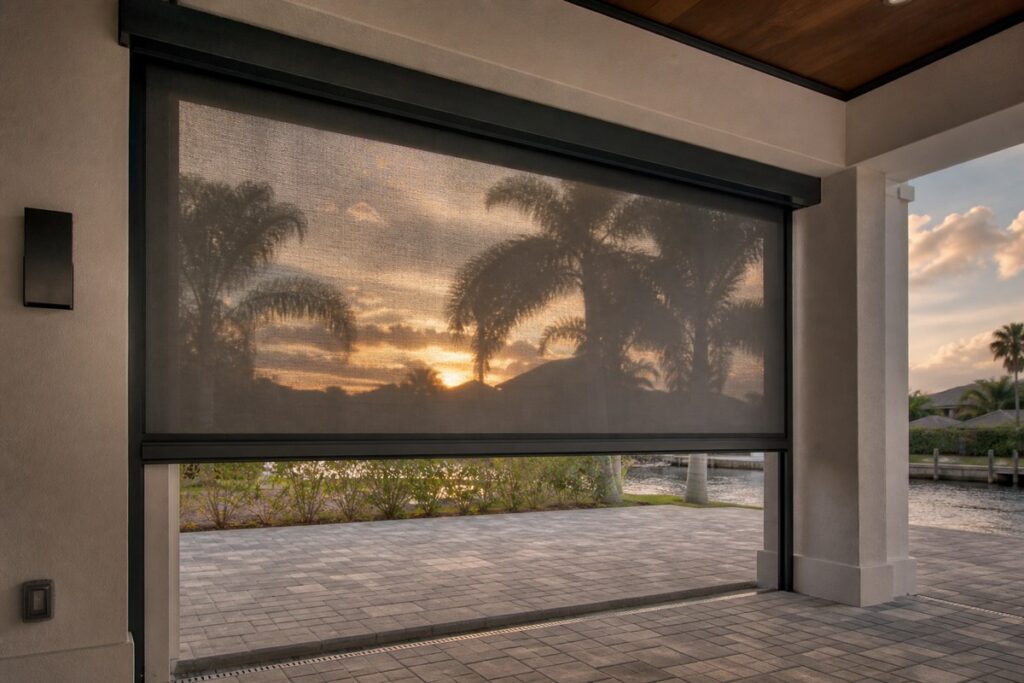
Roll-down hurricane screens are one of the most popular upgrades we install on Fort Myers lanais, and one of the first questions homeowners ask is simple: what does this actually cost? There isn’t one number that fits every home, because roll-down screens are priced around your specific opening, the equipment you choose, and how the screen will be used day to day. Here’s what actually moves the price up or down, so you can walk into a quote already understanding what you’re paying for.
Opening Size and Number of Sections
The single biggest factor in any roll-down screen quote is the size of the opening you’re covering. A single lanai opening is a very different job than wrapping an entire pool cage or covering a wide, multi-panel patio with several separate screen sections. Wider openings need a wider housing, a longer track, and more screen material, which naturally scales the price up. If you’re covering multiple openings around the same lanai, expect the estimate to reflect each section individually, since every opening has its own header, track, and drop length.
Manual vs Motorized Operation
Roll-down screens come in manual, hand-crank versions and motorized versions that lower and raise at the push of a button or a wall switch. Motorized systems cost more up front because you’re paying for the motor, the wiring, and the control hardware in addition to the screen and housing itself. Manual systems are the simpler, lower-cost option and work well for openings that don’t get used every day. If you plan to lower your screens frequently, whether for afternoon shade, bug control, or storm prep, the convenience of motorized operation is often worth the difference for the homeowners who choose it.
Screen Material and Mesh Weight
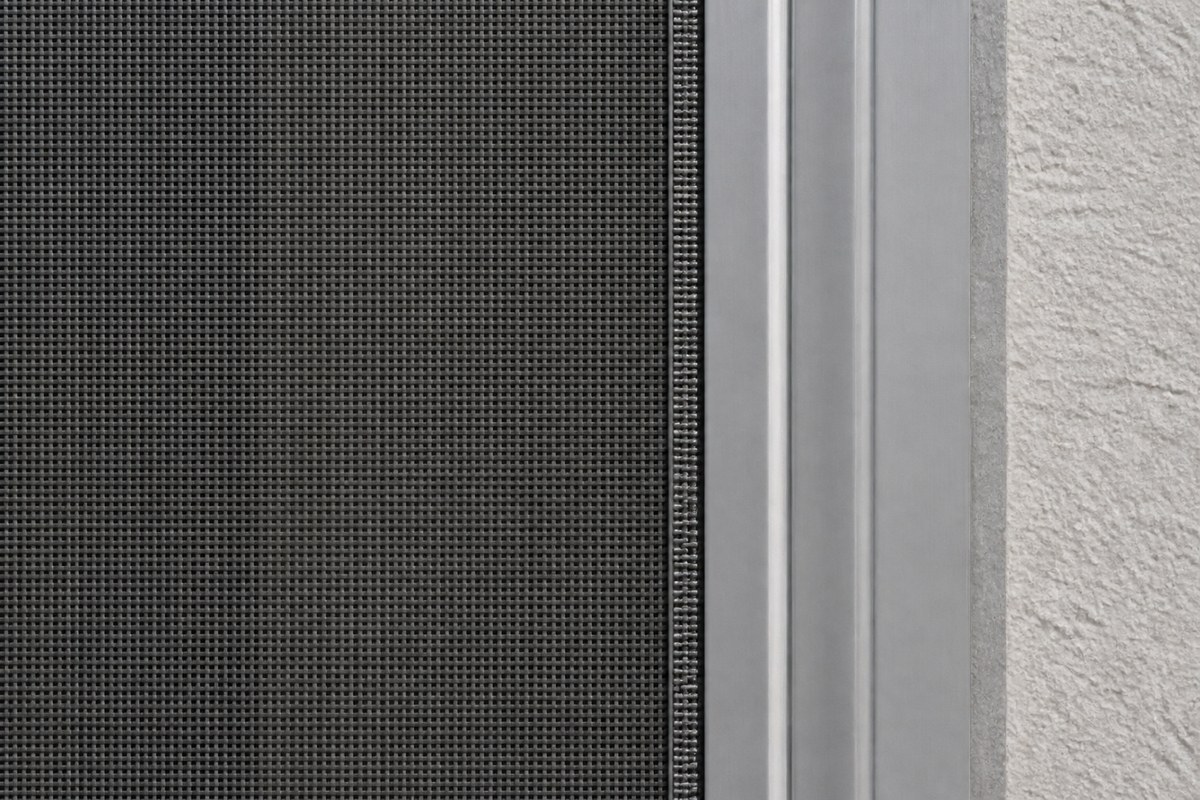
Not all roll-down screen fabric is the same. Lighter mesh is common for everyday sun and bug screens, while heavier, storm-rated mesh is built to stand up to wind-driven debris during a hurricane. If your goal is storm protection rather than just shade and privacy, expect the heavier-duty mesh option to factor into the estimate. It’s worth being clear with your installer about whether you want a screen that’s primarily for comfort, primarily for storm protection, or both, since that changes which product they’ll quote.
Housing, Color, and Mounting Conditions
The aluminum housing that holds the rolled screen also affects the estimate. Housing comes in different sizes depending on how much screen it needs to hold for taller or wider openings, and it’s available in a range of colors to match your home’s trim or stucco. Mounting conditions matter too: a straightforward, flat lanai opening is generally simpler to fit than an opening with an irregular header, a beam obstruction, or a curved pool cage frame that needs custom track work.
Number of Openings Covered at Once
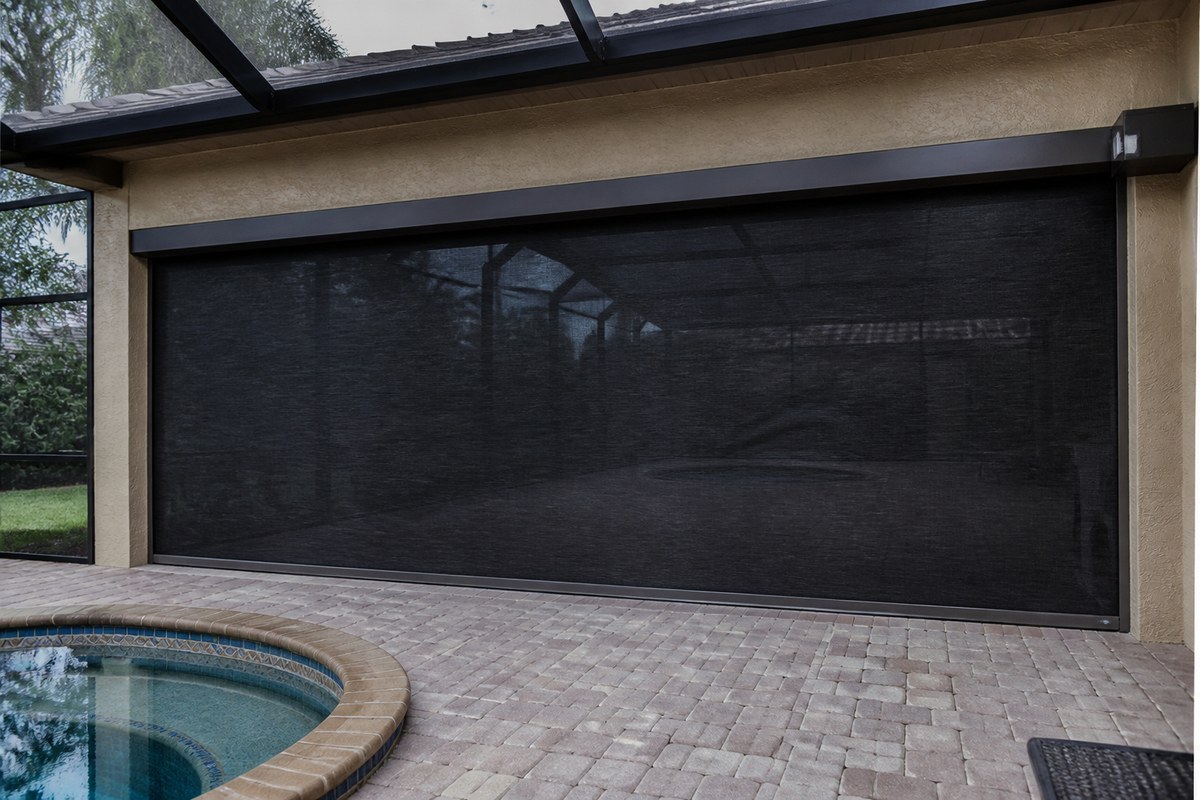
Homeowners who cover several openings in the same project, rather than adding one screen at a time over several years, often see a more efficient overall estimate, since the installation crew is on site once and the openings can be measured and installed together. If you’re planning to eventually screen in your whole lanai, it’s worth asking your installer to quote the full project even if you decide to phase the work, so you know what the complete picture looks like.
How Roll-Down Screens Compare to Other Openings on Your House
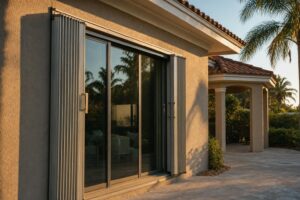
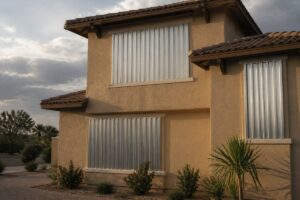
It helps to see where roll-down screens fit alongside the rest of your storm protection lineup. Roll-down shutters, which we cover in detail on our roll-down shutters page, are solid aluminum and built specifically for storm protection on windows and doors. Roll-down screens use a mesh fabric instead of solid slats, which means they let light and air through even when lowered, and many homeowners use them on a lanai or pool cage where a fully solid shutter isn’t practical day to day. Because the mesh and hardware are different from a solid shutter system, the two products are priced and quoted separately, even when they’re installed on the same visit.
Some homeowners ask whether they should choose one system or the other for a given opening. In practice, it comes down to how the space is used. A lanai that the household treats as everyday living space, with furniture, a grill, or a pool table, tends to be a better fit for a screen that can come down for shade and bugs on a normal afternoon and still offer protection when a storm mesh is used. A window or sliding door that’s purely an entry point is often better served by a solid roll-down shutter instead.
Financing and Timing Your Project
Roll-down screen projects are often scheduled well ahead of hurricane season so measurement, ordering, and installation aren’t rushed against an approaching storm. If cost is a factor in when you move forward, ask your installer about available financing or payment options during your estimate, and be upfront about your budget range so they can walk you through which combination of opening size, mesh, and manual versus motorized operation fits what you’re comfortable spending.
Getting an Accurate Number for Your Home
Because opening size, operation type, mesh choice, and mounting conditions all move independently, the only way to get a real number is to have someone measure your specific lanai or patio. Photos and rough dimensions can give a ballpark, but roll-down screens are custom-fit equipment, and small differences in header height or opening width can change what hardware is needed. A short in-home visit gets you a firm, itemized estimate instead of a guess.
During that visit, it’s also a good time to ask about maintenance. Roll-down screens hold up well in Fort Myers weather when the track stays clean and the housing is kept free of debris, but salt air and pollen can build up over time like they do on any exterior hardware. A quick rinse and a periodic check of the track alignment go a long way toward keeping a screen system operating smoothly for years, whether it’s raised and lowered daily or mostly stays parked in the housing until storm season.
Frequently Asked Questions
Are motorized roll-down screens worth the extra cost?
For openings you’ll lower and raise often, most homeowners find the convenience worthwhile. For an opening you’ll rarely adjust, manual operation is a perfectly practical, lower-cost option.
Can I install roll-down screens on just part of my lanai now and add more later?
Yes, many homeowners phase their screens over more than one project. Ask your installer to quote the full opening plan up front so future sections match your existing hardware and color.
Do roll-down screens protect against storms, or are they just for bugs and sun?
It depends on the mesh you choose. Lighter mesh is best for everyday comfort and bug control, while heavier, storm-rated mesh is built for wind-driven debris during a hurricane. Tell your installer which use case matters most to you.
What information do I need before requesting an estimate?
You don’t need exact measurements. Just have a general idea of which openings you want covered and whether you’re leaning manual or motorized, and a technician can handle the rest during the in-home visit.
If you’re ready to find out what roll-down hurricane screens would cost for your specific lanai or patio, contact Hurricane Shutter Co. to schedule a free in-home estimate. We’ll measure your openings, walk you through manual versus motorized options, and give you an itemized number before you decide on anything.
Related Hurricane Protection Services
Explore the service pages and buying resources most closely tied to this topic.