When a storm is bearing down on Fort Myers, the fastest way to protect your windows is often a set of storm panels. They go up quickly, come down just as fast, and store away in a garage or shed the rest of the year. But once you start shopping, you’ll run into a choice that trips up a lot of homeowners: aluminum panels or clear polycarbonate panels? Both protect the same openings, but they behave very differently on install day, in storage, and during the storm itself. Here’s how to think through the decision for your home.
What Aluminum Storm Panels Offer
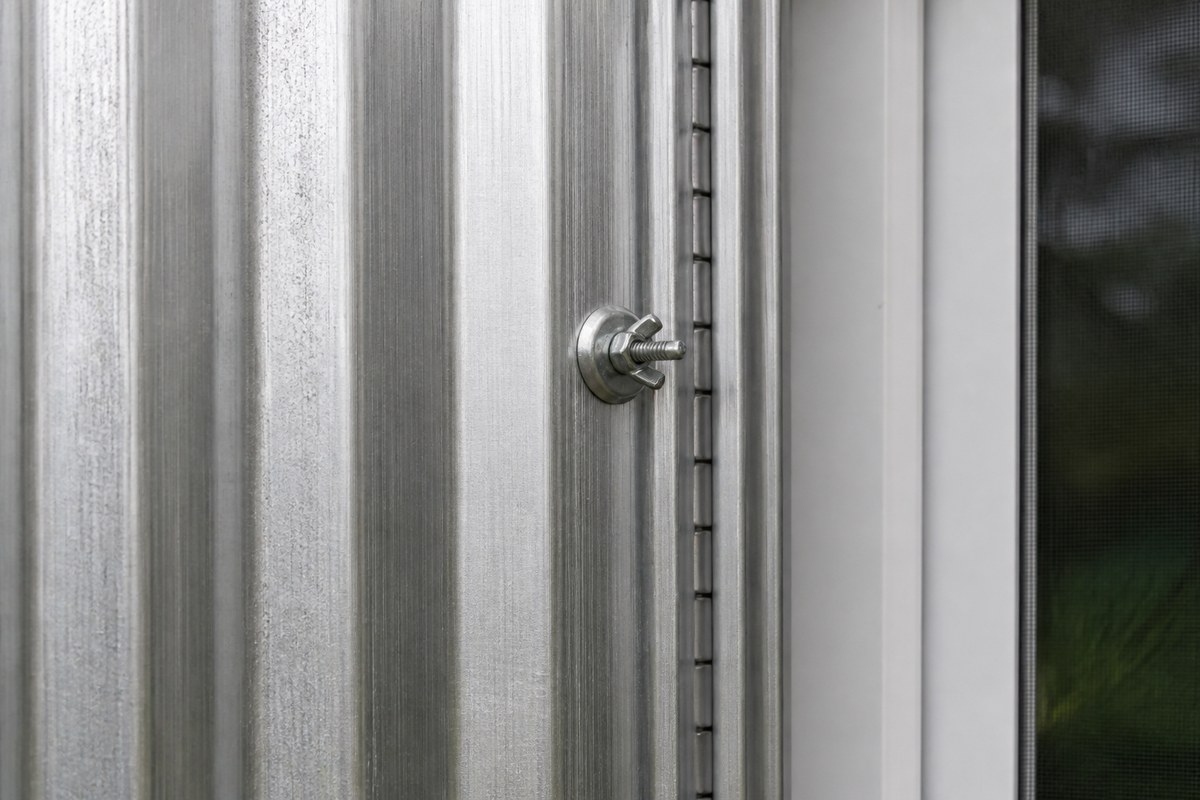
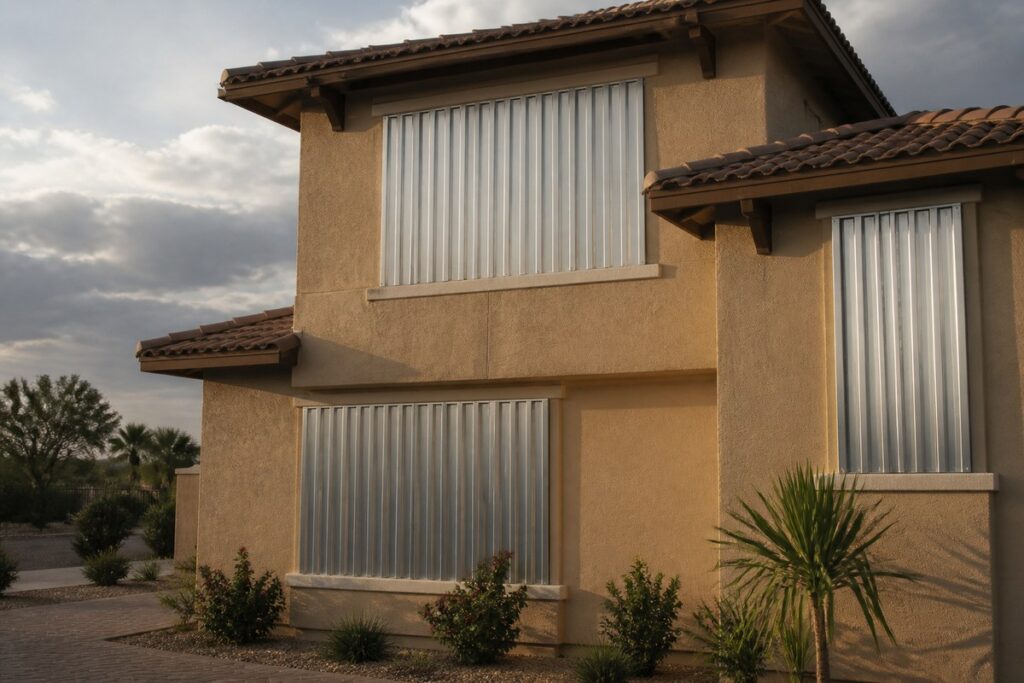
Aluminum storm panels are the classic corrugated panel most people picture when they hear “hurricane shutters.” They’re lightweight for their strength, resistant to corrosion when properly finished, and they’ve been protecting Southwest Florida homes for decades. Because the panels are solid metal, they block sunlight completely once installed, which some homeowners like for security reasons when a home will be empty during evacuation.
The tradeoff is visibility. With aluminum panels up, the interior of the home goes dark. If you plan to shelter in place or want to keep an eye on conditions outside without opening a door, that can feel confining during a multi-day storm event. Aluminum panels are also opaque to entry, which some homeowners prefer as a visual deterrent while they’re away.
What Polycarbonate Storm Panels Offer
Polycarbonate panels, sometimes called clear panels or Lexan-style panels, are built from the same rigid, corrugated profile as aluminum panels but manufactured from a translucent polymer instead of metal. The biggest practical difference is light. With polycarbonate panels installed, natural daylight still comes through the windows, so the interior of the home doesn’t go completely dark while the panels are up.
That translucency matters more than it sounds. Extended power outages after a storm are common in Lee County, and a home that still gets daylight through the windows is a lot easier to live in for a few days than one that’s pitch black around the clock. Polycarbonate panels also tend to be a little more flexible than aluminum, which can make handling and storage slightly easier for some homeowners, though both materials require careful, dry storage between seasons.
Comparing Aluminum and Polycarbonate Panels
Both panel types mount the same way, sliding into a track system or securing with bolts and wing nuts at the header and sill, and both are removed and stored when the storm passes. The real differences come down to three things: light transmission, weight and handling, and long-term durability in a coastal environment.
Aluminum holds up well over many seasons if it’s kept dry and free of trapped moisture, but it can show pitting or corrosion over time in homes close to the water if it isn’t rinsed and dried before storage. Polycarbonate resists corrosion by nature since it isn’t metal, but it can show some UV yellowing after many years of sun exposure if panels are left up longer than necessary. Neither issue is a dealbreaker, but they’re worth knowing before you choose.
Weight is another consideration if you’re the one carrying panels up a ladder. Aluminum panels are generally lighter per square foot than polycarbonate of comparable thickness, which can matter for larger openings like sliding glass doors or picture windows that take a full-size panel.
Which Panel Type Fits Your Home
If your home will typically sit empty during a storm and you want maximum opacity and a traditional, proven track record, aluminum panels are usually the more familiar choice. If you or family members may need to stay in the home through the outer bands of a storm, or you simply want to avoid a completely blacked-out interior during a multi-day outage, polycarbonate panels are worth a closer look.
Many Fort Myers homes actually mix the two: aluminum on secondary openings like a garage or guest bedroom, and polycarbonate on the primary living areas where natural light matters most during an extended outage. There’s no wrong answer here, it comes down to how you use your home during and after a storm.
Installation and Storage Considerations
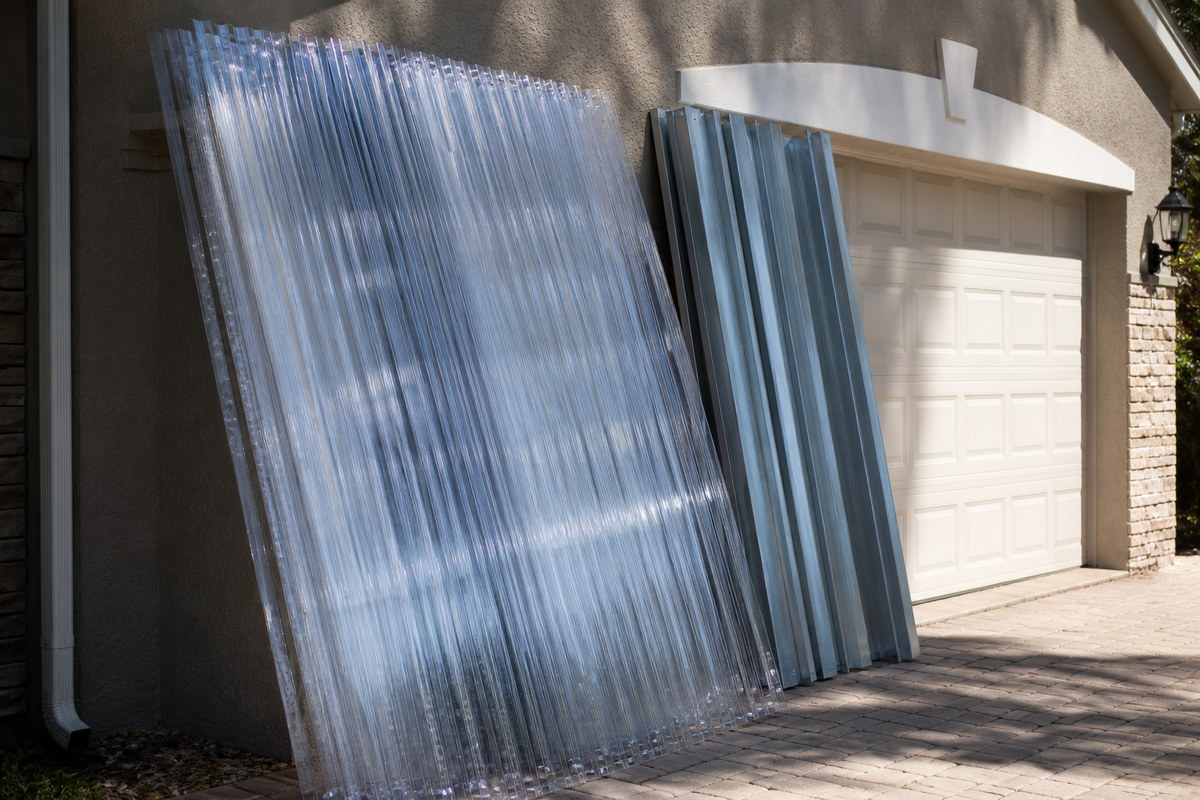
Both panel types need to be measured and fitted to your specific openings, since a poor fit at the track or header undermines the protection either material can offer. Panels should be labeled by opening when they’re removed so they go back up in the right spot next season, and they should be stored flat or upright in a dry area, away from direct ground contact that can trap moisture against the panel.
If you’re comparing panels for the first time, it helps to have someone measure your actual openings and walk the property with you, since window size, door type, and even which side of the home faces prevailing wind can all affect which material makes more sense for a given opening.
Combining Storm Panels with Other Openings
Storm panels don’t have to be the only protection on your home. It’s common in Fort Myers to see a house with roll-down shutters or accordion shutters on the primary living areas and storm panels reserved for secondary openings like a workshop window, a garage side door, or a rarely used guest room. Panels are a practical, lower-profile option for openings that don’t get used often enough to justify a permanently mounted system, while still giving you full coverage for those windows when a storm is approaching.
This mix-and-match approach is also useful for additions or renovated spaces. If you’ve added a Florida room, converted a lanai, or put in a new window after your original shutters were installed, storm panels are often the fastest way to bring that new opening up to the same protection level as the rest of the house without redoing your whole system.
What to Expect When You Call for an Estimate
Because every home has a different mix of window sizes, door openings, and wall types, storm panels are not a one-size-fits-all purchase. When you request an estimate, expect a technician to walk the exterior of your home, measure each opening you want covered, and note anything unusual, like a deep-set window, an oversized sliding door, or an opening near a corner that sees extra wind load during a storm. That walkthrough is also the right time to ask questions about aluminum versus polycarbonate for your specific openings, since the same house can reasonably use both depending on what each room needs.
You’ll also want to talk through storage. If you don’t have a dry, covered space to keep panels between seasons, that’s worth mentioning up front, since it can factor into which material holds up best for your situation over the long run.
Frequently Asked Questions
Can I mix aluminum and polycarbonate panels on the same house?
Yes. Many homeowners use aluminum on openings where opacity doesn’t matter and polycarbonate on rooms where they want daylight during an extended outage.
Do polycarbonate panels provide the same level of protection as aluminum?
Both are engineered as impact-resistant storm panels for the openings they’re fitted to. The right choice depends more on your household’s needs during a storm than on a meaningful protection gap between the two materials.
How should storm panels be stored between hurricane seasons?
Clean and dry the panels before storage, label each one for its matching opening, and keep them off bare ground in a covered, dry area to prevent corrosion or warping.
If you’re trying to decide between aluminum and polycarbonate storm panels for your Fort Myers home, contact Hurricane Shutter Co. for a free estimate. We’ll measure your openings, walk you through both materials in person, and help you choose the option that fits how your household actually uses the home during storm season.
Related Hurricane Protection Services
Explore the service pages and buying resources most closely tied to this topic.