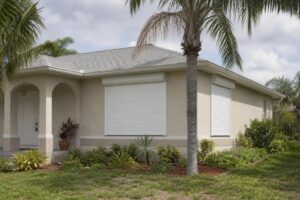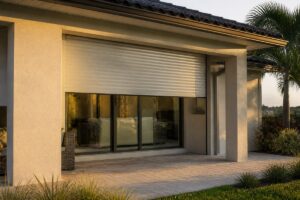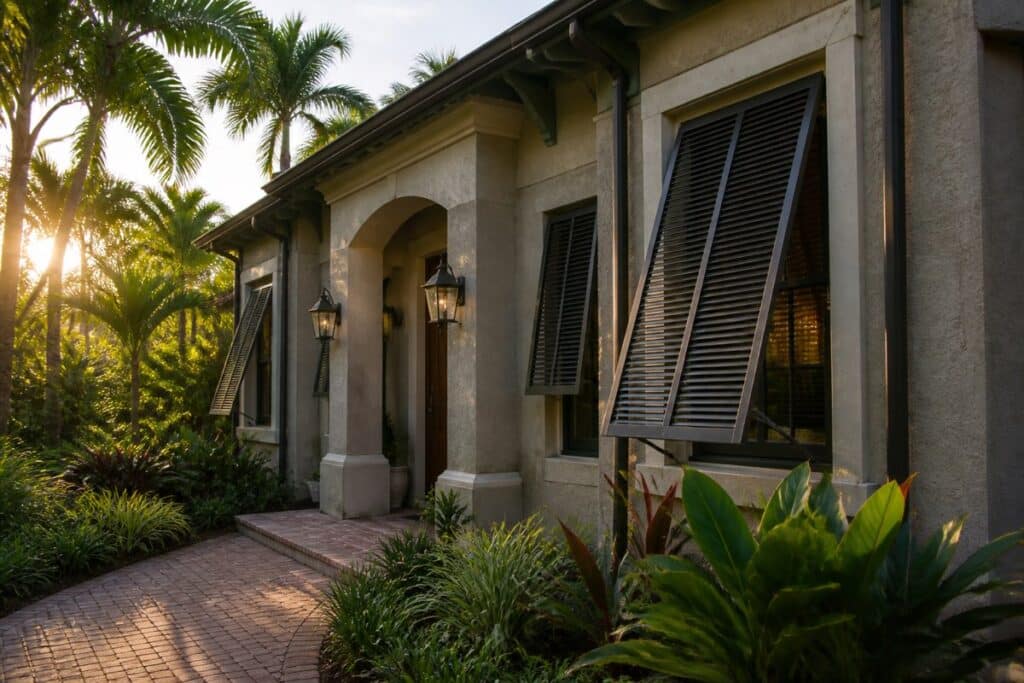
Bahama shutters are one of the most requested looks on Fort Myers homes, and it is easy to see why. That angled, tropical silhouette adds curb appeal while doubling as real storm protection, which is a combination few other shutter styles offer. That popularity is exactly why we get asked so often whether a motivated homeowner can install Bahama shutters themselves.
The honest answer is: it depends on what you are trying to accomplish. A decorative Bahama shutter that never has to withstand a storm is a very different project than a fully rated, code-compliant Bahama shutter meant to protect a window during a hurricane. At Hurricane Shutter Co, we have installed Bahama shutters across Fort Myers and the surrounding area since 1979, and we want homeowners to go into this decision with clear eyes.
Why Homeowners Consider DIY Bahama Shutters
The appeal of a DIY approach is straightforward. Bahama shutters look like a manageable weekend project from the outside: a frame, a set of louvered panels, and a hinge system that props open at an angle. Kits are marketed as beginner-friendly, and the visual payoff, that classic tropical exterior, is a strong motivator for homeowners who enjoy hands-on projects.
Cost is the other major driver. Labor is often the largest line item on any shutter installation, so skipping it looks like an easy way to save money, especially on a home with several windows that could use the same treatment.
What DIY Installation Really Involves
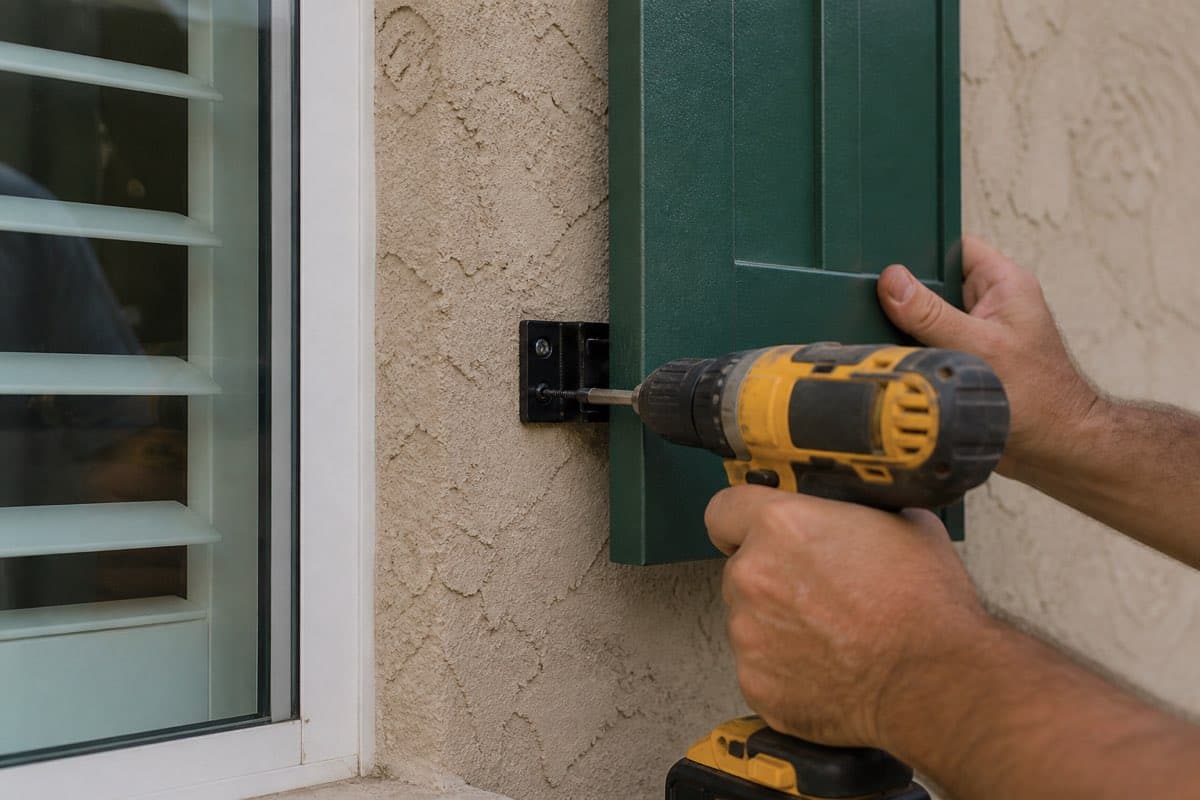
Installing Bahama shutters correctly means more than screwing a frame to the wall. Each opening has to be measured precisely so the shutter closes flush and seals properly against wind-driven rain. The mounting hardware has to anchor into structural framing or block, not just stucco or trim, and the anchor spacing and fastener type matter for how much wind load the shutter can actually resist once it is closed.
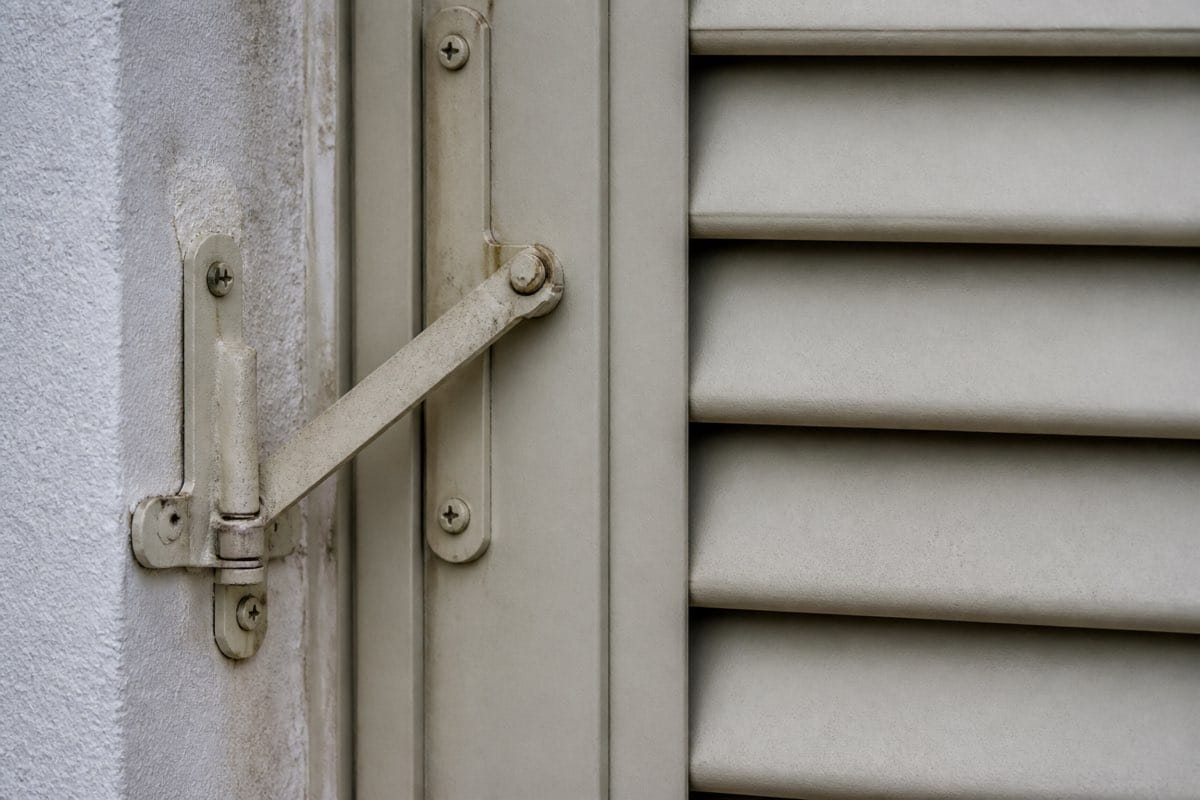
Homeowners taking on this project themselves also need to think through the hinge and prop-arm hardware, which controls both the everyday open angle and how securely the shutter locks down before a storm. Getting this wrong does not just look sloppy. It can mean the difference between a shutter that performs the way it is designed to and one that fails at the exact moment you need it.
Where DIY Installations Commonly Go Wrong
The most common issue we see on DIY Bahama shutter jobs is improper anchoring. Fasteners driven into stucco alone, without reaching the structural wall behind it, may hold the shutter in place on a calm day but are not reliable once real wind load is applied. We have also seen shutters mounted slightly out of level or square, which puts uneven stress on the hinges and shortens the life of the whole system.
Sizing mistakes are another frequent problem. A shutter that is even a little undersized for its opening will not seal the way it should, and one that is oversized can bind against the frame or fail to close all the way. Both situations reduce the storm protection the shutter is meant to provide, even though the shutter may look fine from the street.
Finally, many homeowners are surprised to learn that manufacturer warranties on Bahama shutter hardware often require professional installation to remain valid. A DIY install that voids the manufacturer warranty can leave you without recourse if hardware fails down the road, which is a cost that rarely gets factored into the original DIY budget.
Salt air is another factor that catches DIY installers off guard in our part of Florida. Standard fasteners and hardware that would hold up fine further inland can corrode much faster in a coastal or near-coastal environment like Fort Myers. Choosing the wrong grade of hardware for a Bahama shutter might not show a problem in the first year, but it can quietly weaken the anchoring system over time, which is exactly the kind of issue a professional installer accounts for from the start rather than discovering after the fact.
It is also worth checking with your local building department before starting any DIY shutter project. Depending on your municipality and the scope of the work, exterior modifications like shutters may fall under local permitting or homeowners association review, and starting without checking first can mean redoing paperwork, or in some cases the physical installation, after the fact.
Weighing the Real Cost Difference
When homeowners compare DIY kits to a professional quote, they are usually comparing the wrong numbers. A DIY kit price covers materials only. It does not include the cost of your own time, the tools you may need to buy or rent, or the risk of a mistake that has to be corrected later, sometimes by a professional anyway once the shutter has already failed to perform as expected.
A professional quote, by contrast, covers precise measurement, correct hardware selection for your specific wall construction, proper anchoring, and a finished installation that is ready to perform when a storm arrives. For homeowners protecting a single decorative opening with no real storm exposure, a DIY kit may be a reasonable trade-off. For anyone relying on Bahama shutters as part of their actual hurricane plan, the cost difference is usually smaller than expected once you account for tools, time, and the risk of redoing the work.
When Professional Installation Makes More Sense
If your goal is genuine storm protection, not just the look, professional installation is worth the investment. A trained installer knows how to read your wall construction, choose the right anchoring approach for stucco, block, or wood-frame construction, and set the hinge hardware so the shutter performs correctly both as everyday shade and as storm protection when a hurricane is approaching.
Professional installation also comes with accountability. If something is not right after the job is done, you have someone to call. That is a meaningful difference from a DIY project, where any mistakes in anchoring or alignment are yours to diagnose and fix, often after the damage is already done during a storm.
Frequently Asked Questions About DIY Bahama Shutters
Can I install Bahama shutters myself on a home in Fort Myers? You can attempt it, but proper wind-rated installation requires attention to anchoring, spacing, and hardware that many first-time DIYers underestimate. If your goal is real storm protection, not just the look, professional installation gives you a system that has been fitted to your exact wall construction and openings.
Do DIY Bahama shutters still qualify for insurance discounts? That depends on your insurer and how the shutters were installed and documented. Professionally installed, code-compliant shutters are generally easier to document for insurance purposes than a self-installed system.
What does professional installation include that a kit does not? A site visit to assess your specific openings and wall construction, precise measurements, and hardware selected and anchored to match the wind exposure your home actually faces, not a one-size-fits-all kit assumption.
Get Bahama Shutters Installed Right the First Time
Bahama shutters can be a beautiful and effective addition to your Fort Myers home, but the value comes from how well they are installed, not just which style you choose. If you are weighing a DIY project against professional installation, talk to Hurricane Shutter Co before you buy a kit. Contact us or call (239) 466-7577 to schedule a free estimate, and we will help you decide what makes the most sense for your home, your budget, and the level of protection you actually need.
Related Hurricane Protection Services
Explore the service pages and buying resources most closely tied to this topic.