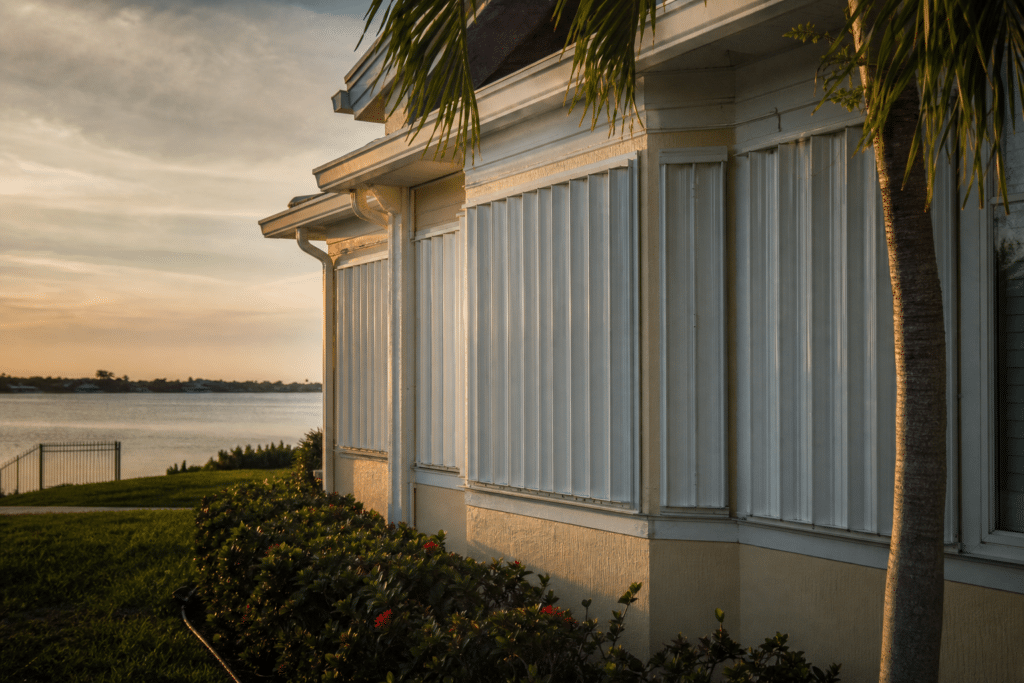
Salt air is the quiet tax every coastal homeowner pays. You can see what it does to doorknobs, light fixtures, and car finishes, and your hurricane shutters live in the same environment year-round, through every sea breeze and summer squall. The difference is that a corroded light fixture is an eyesore, while a corroded shutter is a piece of storm protection that might not close when a hurricane is two days offshore.
The encouraging part: keeping salt air from shortening your shutters’ life takes minutes, not weekends. Here is what salt actually does to shutter hardware, and a simple routine coastal homeowners can use before storm season.
What Salt Air Does to Shutter Systems
Salt is hygroscopic, which means it pulls moisture out of the air and holds it against whatever surface it lands on. A thin, invisible film of salt on your shutter tracks keeps those surfaces slightly damp long after the morning humidity burns off, and damp metal is where corrosion starts.
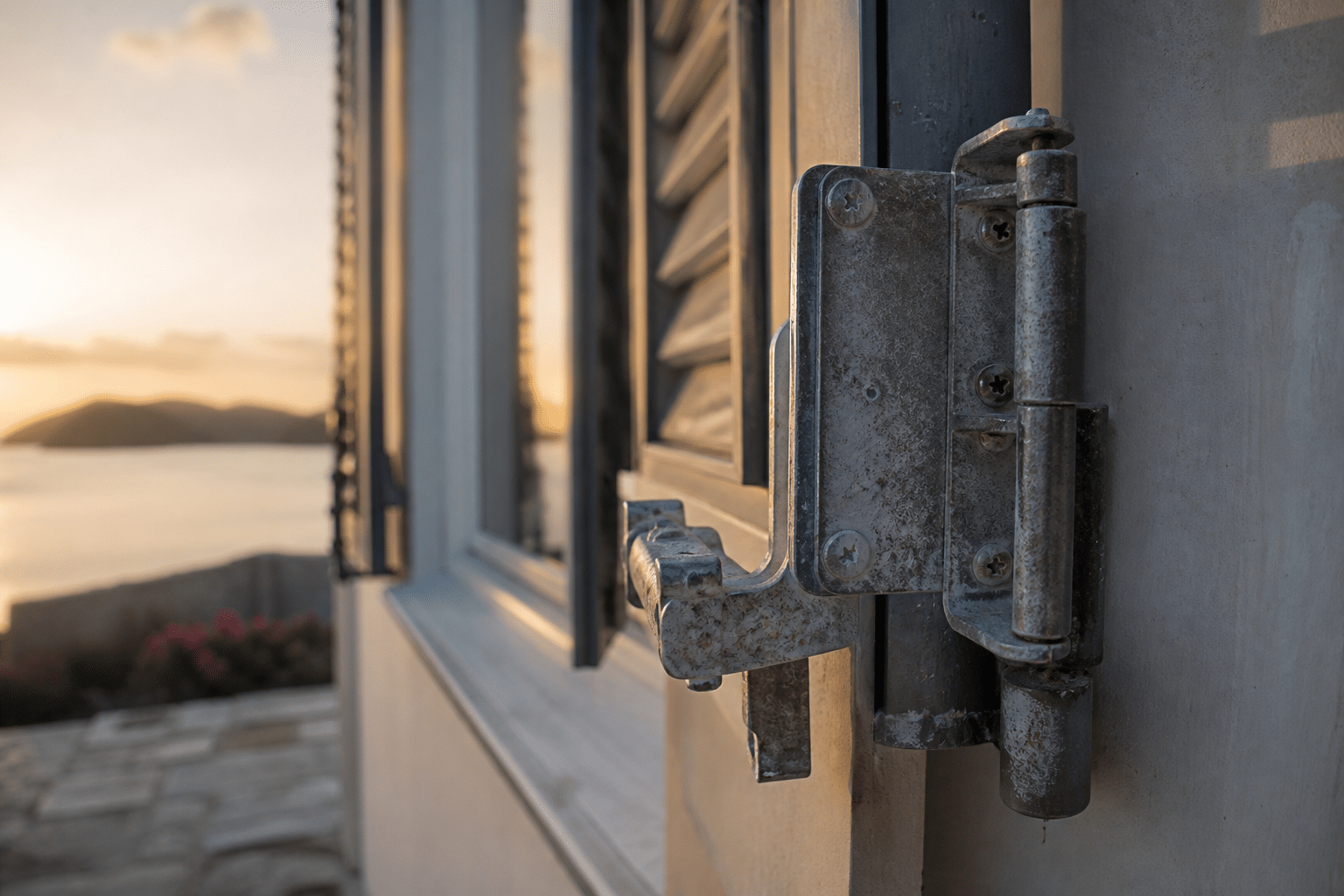
Most modern storm shutters use aluminum, which resists rust far better than steel. But aluminum is not immune. It develops white, powdery oxidation that roughens tracks and seizes moving parts, and the weak points of any system corrode first: steel fasteners, hinge pins, springs, locks, and motor housings. A shutter is only as reliable as its crankiest moving part, and salt finds that part for you.
The closer you live to open water, the faster this happens. Homes on the beach or a canal can see corrosion appear in months on unmaintained hardware. Even a few miles inland, salt-laden air works steadily on anything that never gets rinsed.
The Freshwater Rinse: Your Best Defense
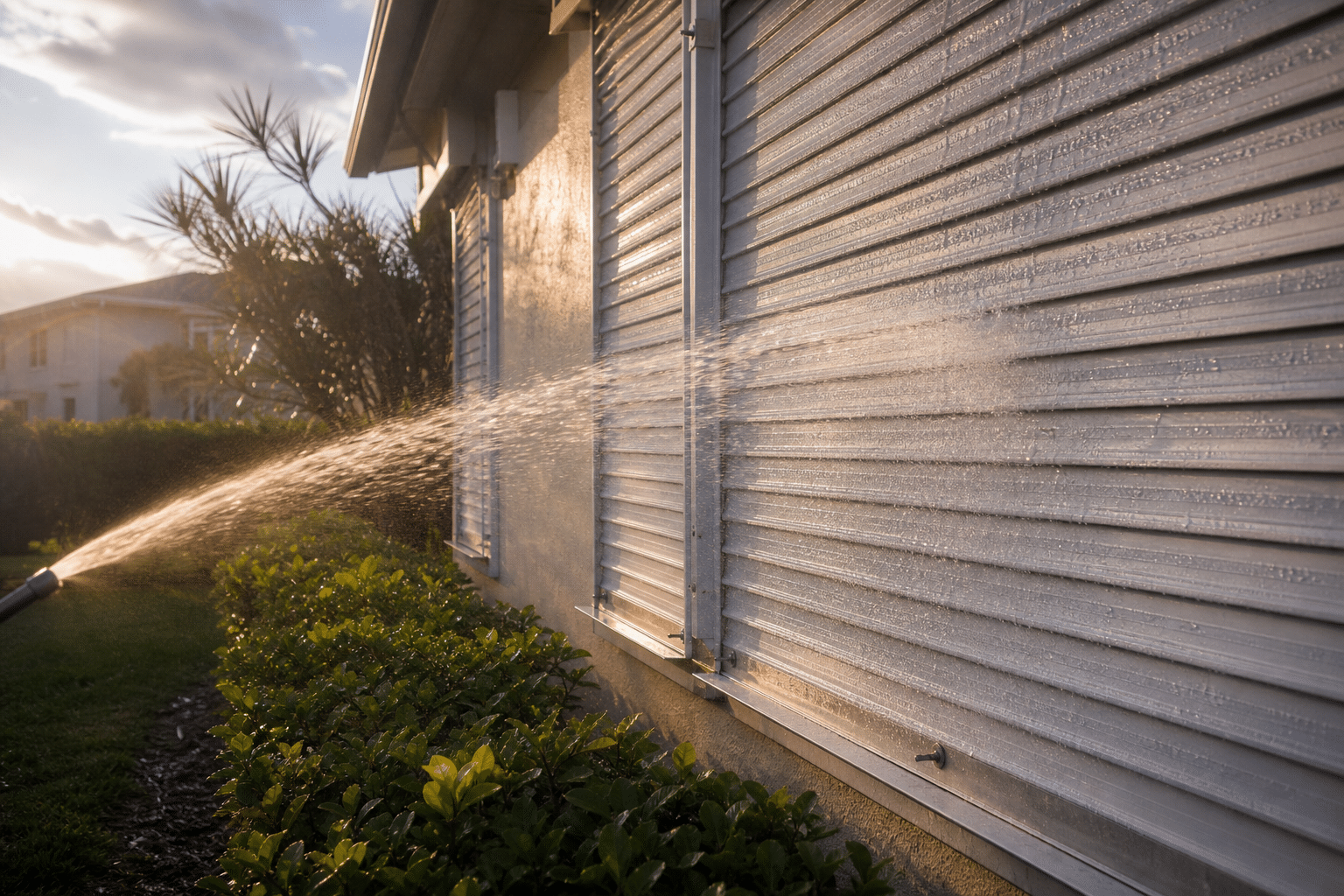
The single most effective thing you can do costs nothing but a few minutes with a garden hose. A freshwater rinse dissolves and carries away the salt film before it can settle in and hold moisture.
- Rinse shutters, tracks, and hardware monthly during the dry season, and after any storm that whips up salt spray.
- Homes directly on the water should rinse every couple of weeks. The salt load near open water is simply higher.
- Use plain water and moderate pressure. A hose with a spray nozzle is perfect. Avoid pressure washers up close, which can force water into motor housings and strip protective finishes.
- Get the hidden surfaces. Flush the inside of accordion tracks, the underside of Bahama shutter hinges, and the header boxes of roll-downs where salt and debris collect.
Twice a year, follow the rinse with a wash using mild dish soap and a soft brush, then rinse again. That removes the grime that plain water leaves behind and gives you a natural moment to look closely at every part of the system.
Lubricate the Moving Parts
After a wash is the right time to lubricate. Dry silicone spray is the workhorse here: it protects tracks, rollers, and hinges without attracting the grit that oily lubricants hold onto. A light pass along accordion tracks and wheel carriages, hinge pins on Bahama shutters, and the guide rails of roll-downs keeps everything gliding the way it did on installation day.
Skip heavy grease and general-purpose penetrating oils on tracks. They feel effective at first, then collect sand and salt into an abrasive paste that wears the system faster than no lubricant at all.
Inspect While You Clean
Corrosion rarely announces itself. It shows up as small changes you will catch during a rinse if you know what to look for:
- White, chalky spots or pitting on aluminum surfaces
- Rust stains bleeding from screws, bolts, or hinge pins
- A shutter that drags, sticks, or needs more force than last season
- Bubbling or flaking paint and powder coat, which means moisture is working underneath
- Stiff locks, handles, or cranks
Catch these early and the fix is usually minor: replacing fasteners with stainless equivalents, cleaning up a track, or freeing a stiff lock. Ignore them for a few seasons and the conversation can shift from a simple inspection to replacing panels or whole assemblies.
Test Everything Before Storm Season
Every June at the latest, before the Atlantic hurricane season ramps up, operate every shutter on the house through a full close-and-open cycle. Close accordions and latch them. Run every roll-down all the way down, including the manual override on motorized units, because a power outage is exactly when you will need it. Drop Bahama shutters into their storm position. If storm panels are your protection, test-fit a few panels and turn every wing nut on its stud.
How you store panels in the off-season matters too. Stack them in a dry garage or shed rather than against an exterior wall, slide a strip of cardboard or foam between panels so trapped moisture cannot sit against the metal, and store the hardware in a labeled container indoors. Panels that spend the summer sweating against each other in a damp corner are the ones that come out fused and pitted in October.
A shutter that will not close in June is an inconvenience. The same shutter discovered the day before landfall can become an urgent problem, especially when many homeowners are testing their systems at the same time.
When to Call for Service
Some corrosion problems are past the point of a homeowner fix, and forcing a seized shutter usually turns a small repair into a large one. Call a professional when a shutter will not complete its travel, when a motor strains or stalls, when hinges or fasteners have visibly rusted through, or when accordion panels have separated at their joints. A professional inspection can identify problems across common hurricane shutter systems, and addressing an issue before storm season is far easier to plan than urgent work when an opening may be left unprotected.
Frequently Asked Questions
How often should I rinse my shutters if I live right on the water?
Every two weeks is a good rhythm for beachfront and canal-front homes, and after any weather that throws visible spray. A quick two-minute rinse beats a long scrub twice a year.
Are stainless steel fasteners worth the upgrade?
On coastal homes, yes. Stainless hinge pins, bolts, and screws resist salt corrosion dramatically better than zinc-plated steel, and upgrading them during maintenance can be a practical protection step for the whole system.
Does powder coating stop salt air corrosion?
It slows it substantially. Powder coat is a baked-on barrier that keeps salt off the aluminum underneath, which is one reason coated shutters, including Bahama shutters in coastal colors, hold up so well here. The barrier only works while it is intact, so address chips and scratches promptly.
Can a corroded shutter be repaired, or does it need replacement?
It depends on what corroded. Hardware, fasteners, and individual slats or panels can usually be replaced economically. Structural corrosion in tracks or housings that have been neglected for years is where replacement becomes the smarter spend. An inspection settles it quickly.
A Few Minutes a Month Keeps Shutters Easier to Use
Salt air never takes a season off, but it is remarkably easy to beat: rinse regularly, lubricate lightly, look closely, and test before June. Do that, and a quality shutter system can stay easier to operate for years. If something on your system already sticks, grinds, or shows rust, contact Hurricane Shutter Co. so the issue can be checked before you need the shutters.
Related Hurricane Protection Services
Explore the service pages and buying resources most closely tied to this topic.